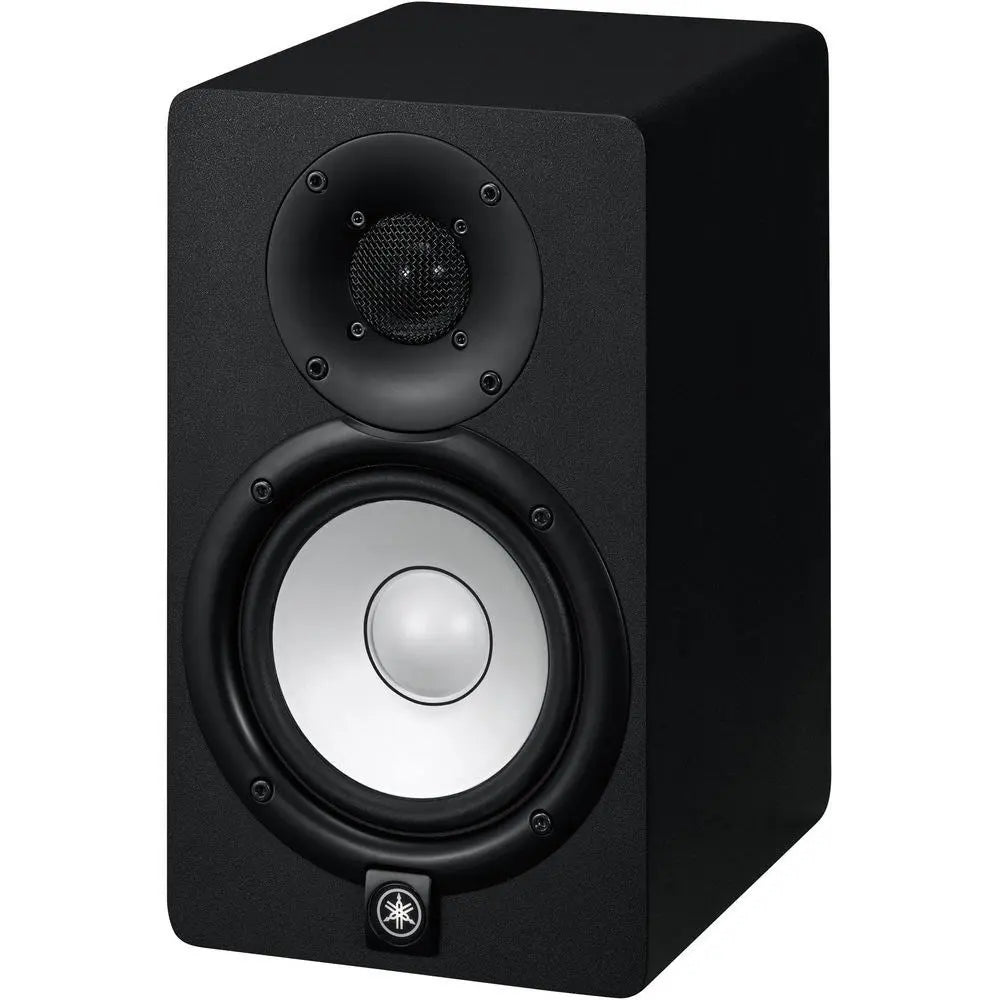
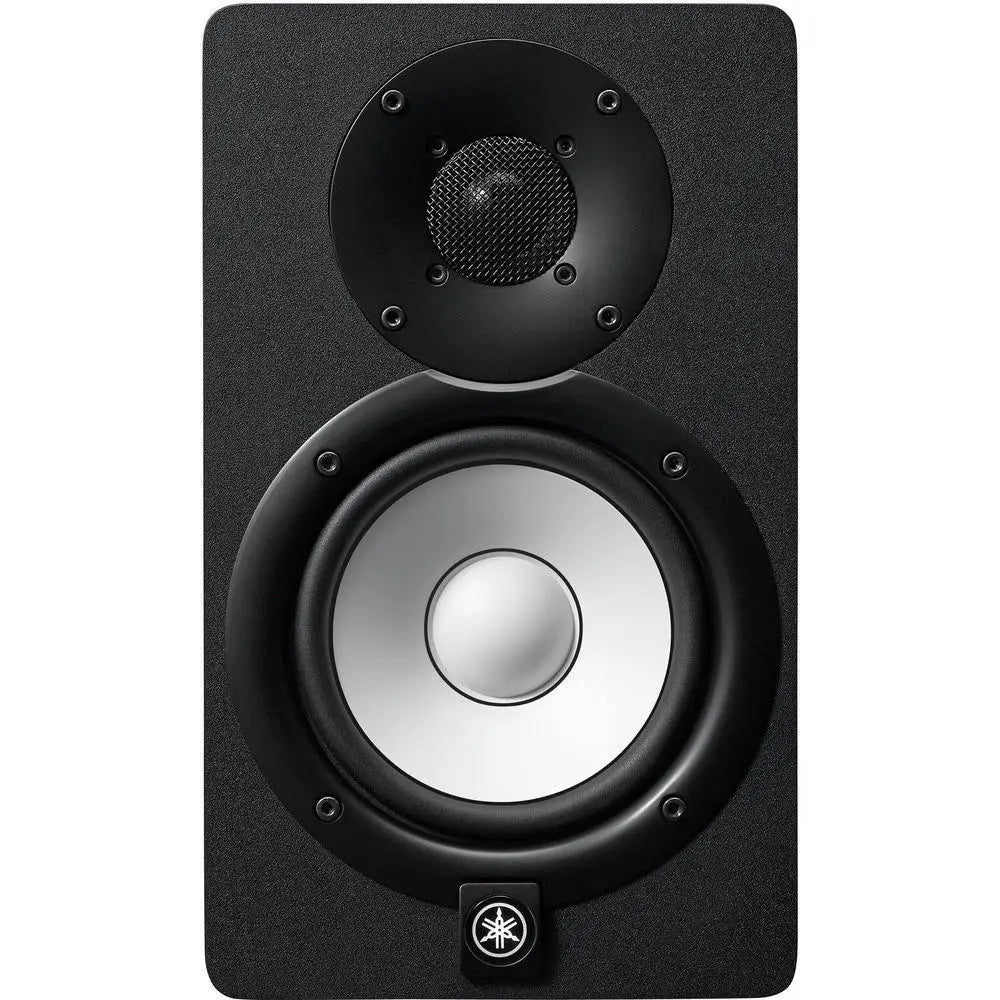
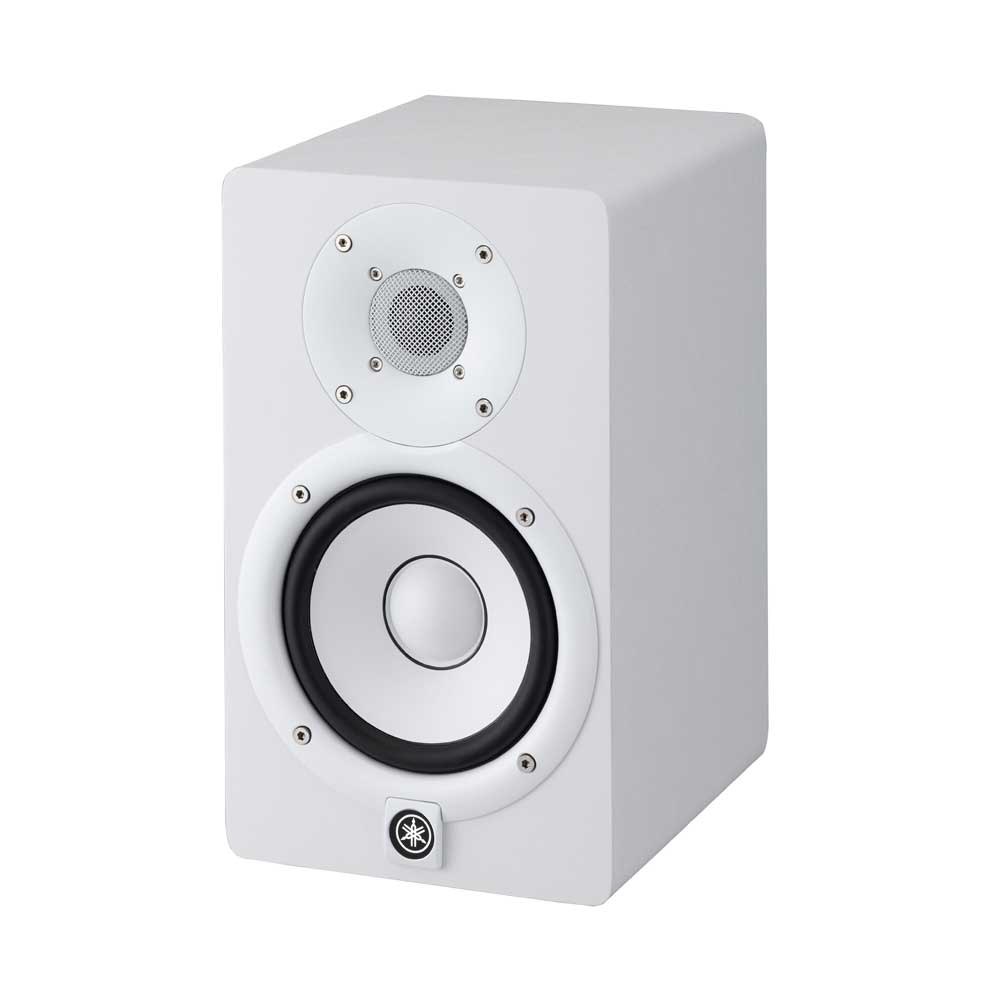
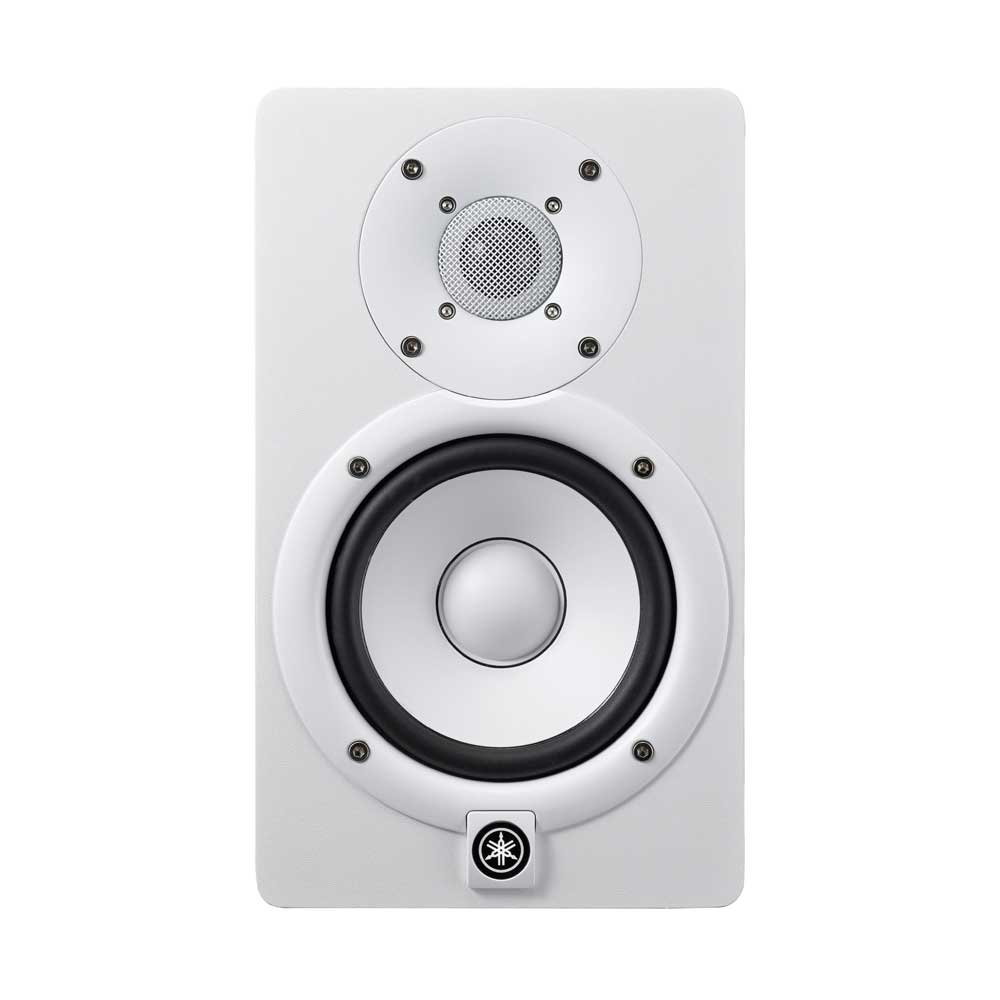
A 2-way bi-amplified nearfield powered studio monitor from Yamaha, with a 5-inch cone woofer and a 1-inch dome tweeter. Yamaha lists 70 W of power amplification and a frequency response of 54 Hz - 30 kHz (-10 dB).
This listing is for one HS5 monitor (each), not a pair. Yamaha lists the packaging as single, so a stereo setup needs two. The options are Black - HS5, White - HS5W, Black Installer - HS5I and White Installer - HS5IW.
Yamaha says that ever since the 1970s, the iconic white woofer and signature sound of its nearfield reference monitors have become a genuine industry standard because of their accuracy.
The Yamaha HS Series, from Yamaha
Why you will love it
Accuracy as the design goal
Yamaha says HS Series monitors are designed to give an honest, precise reference, with a concise sound image, high resolution and a flat response. It says the sound is not coloured or altered, so the mix you make is true to the original.
The HS5 is a 2-way bass reflex design with a 5-inch cone woofer and a 1-inch dome tweeter, crossing over at 2 kHz.

Transducers and bi-amp design
Yamaha says the HS Series uses newly developed transducers. It describes the 1-inch dome tweeter as having a thick waveguide that minimises vibration, and says the tweeter gives a smooth high end up to 30 kHz.
Each speaker has a bi-amp design with a separate amplifier for the woofer and the tweeter. For the HS5, Yamaha lists 70 W (LF 45 W, HF 25 W), which adds up to the 70 W total.
Cabinet and port design
The cabinet is MDF. Yamaha says HS Series enclosures use a three-way mitered-joint technique, drawn from its piano-making experience, to anchor the corners and reduce unwanted resonance.
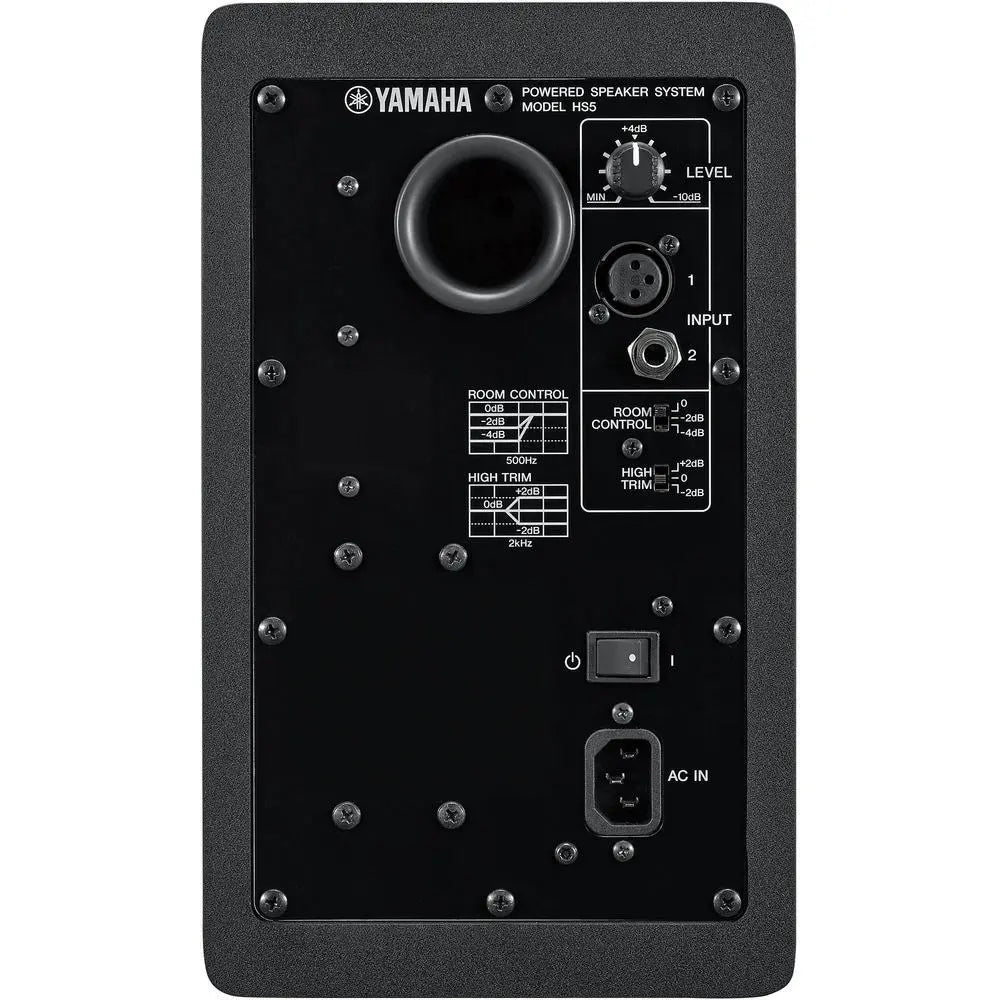
Yamaha also says it analysed and refined the port shape to control vortices at the ends of the port, reducing audible noise by up to 6 dB.

Controls and connections
Yamaha lists a LEVEL control, a ROOM CONTROL switch (0/-2/-4 dB under 500 Hz) and a HIGH TRIM switch (+/-2 dB at high frequencies). Yamaha says ROOM CONTROL attenuates the exaggerated low end that can occur next to walls.
The inputs are XLR3-31 type (balanced) and phone (balanced). Yamaha says they accept balanced or unbalanced sources such as mixers, keyboards and audio interfaces.
HS5I Installer models
The listing includes Installer models (HS5I, in black or white). Yamaha says the I models add mounting points on four surfaces (2 x M5 (60 mm pitch) on four surfaces) and are compatible with optional wall, ceiling and baton brackets. Brackets are not included.
Yamaha's Australian specifications list Wall/ceiling bracket K&M 19440 as an option for the HS5I. The HS5I is slightly heavier than the HS5. Screws for installing brackets (x 2) are supplied with the HS5I.
Is it right for you?
A great fit if you…
- Mix or produce music in a nearfield position
- Have balanced XLR or TRS sources such as an audio interface, mixer or keyboard
- Want a bi-amplified powered monitor with room-matching switches
- Work in a small to medium room where a 5-inch woofer suits the space
Worth knowing
- The listing is for one speaker (each). A stereo setup needs two
- Choose the model you want: black or white, standard or Installer (I)
- The monitors have XLR and phone inputs. Yamaha lists no wireless or USB input
- The I models need optional brackets for installation, which are not included
Build your system
The HS Series sits in a range of sizes from the compact HS3 up to the HS8.
- Other sizes: See the Yamaha HS7 and the Yamaha HS8, both sold singly
- Smaller option: The Yamaha HS4 is a compact pair with a 4.5-inch woofer
- Add bass: See the Yamaha HS8S powered subwoofer, which Yamaha lists in the HS Series
- Place them: See speaker stands for positioning
Specifications
Yamaha HS5 and HS5I
| Type | 2-way bi-amp powered studio monitor, bass reflex |
|---|---|
| Drivers | 5" cone woofer, 1" dome tweeter |
| Frequency response | 54 Hz - 30 kHz (-10 dB), 74 Hz - 24 kHz (-3 dB) |
| Crossover | 2 kHz |
| Output power | 70 W (LF 45 W, HF 25 W) |
| Input sensitivity | -10 dBu / 10k ohms |
| Input connectors | XLR3-31 type (balanced), phone (balanced) |
| Controls | LEVEL (+4 dB / centre click), HIGH TRIM switch (+/-2 dB at HF), ROOM CONTROL switch (0/-2/-4 dB under 500 Hz) |
| Indicator | Power ON (white LED) |
| Power consumption | 45 W |
| Cabinet | MDF |
| Dimensions (W × H × D) | 170 × 285 × 222 mm |
| Net weight | HS5: 5.3 kg. HS5I: 5.5 kg |
| Packaging | Single |
| Mounting (I models only) | 2 x M5 (60 mm pitch) on four surfaces |
| Optional brackets (I models only) | Wall/ceiling bracket K&M 19440 |
Specifications from Yamaha Australia (HS Series HS5/HS7/HS8/HS8S specs page), checked November 2026. Yamaha says specifications are subject to change without notice.
What is in the box
- One HS5 monitor, owner's manual and power cord (as listed by Yamaha)
- HS5I models also include screws for installing brackets (x 2) (as listed by Yamaha)
Questions people ask
Is this one speaker or a pair?
One speaker. The listing is titled (Each) and Yamaha lists the packaging as single. For stereo you need two.
Do I need a separate amplifier?
No. Each HS Series monitor has a built-in bi-amp power amplifier. Yamaha lists a separate amplifier for the woofer and the tweeter.
What do the Installer (I) models add?
Yamaha says the I models add mounting points on four surfaces and work with optional wall, ceiling and baton brackets. Brackets are not included. The HS5I is heavier than the HS5.
What inputs does it have?
XLR3-31 type (balanced) and phone (balanced), per Yamaha. Yamaha says they accept balanced or unbalanced signals.
Can I add a subwoofer?
Yamaha lists the HS8S powered subwoofer in the same HS Series. It has XLR and phone inputs and XLR outputs, a phase switch and low cut and high cut controls (80-120 Hz).
What does Room Control do?
Yamaha says ROOM CONTROL attenuates the exaggerated low end that can occur when speakers sit close to walls. It steps through 0, -2 and -4 dB under 500 Hz.