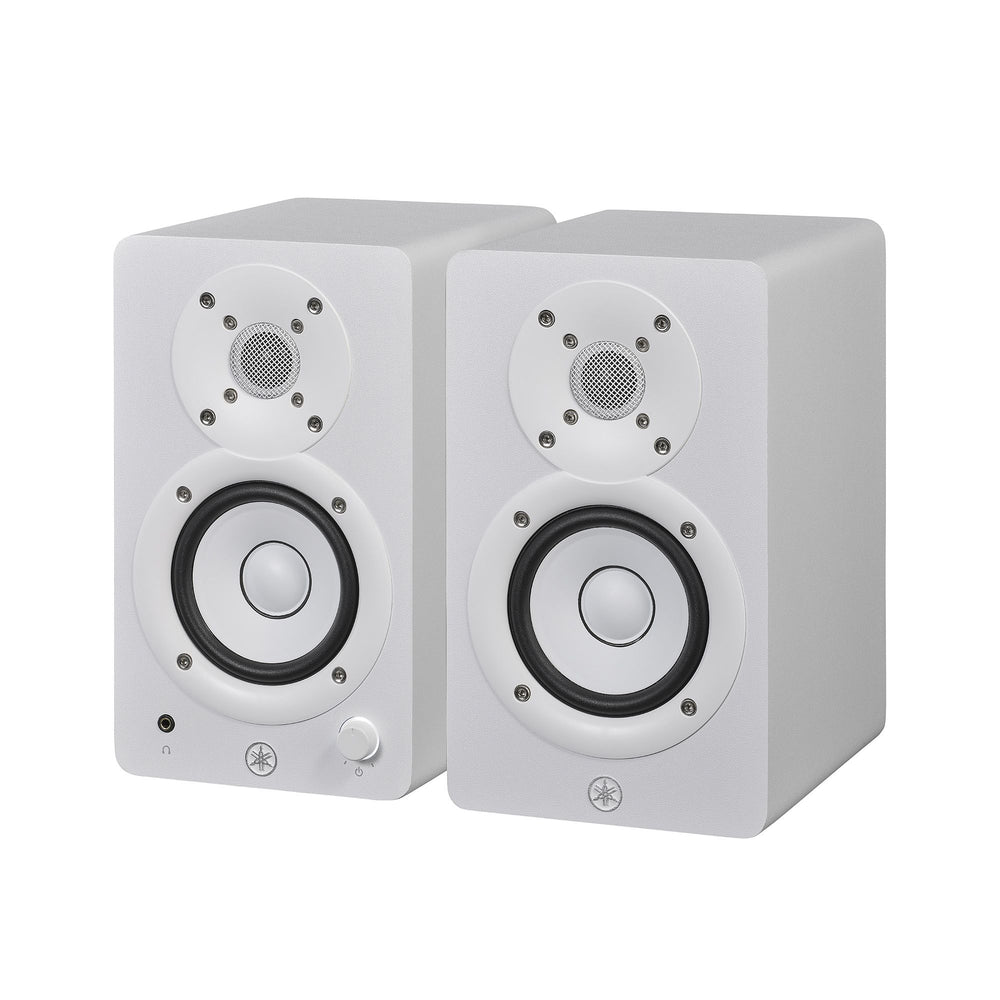
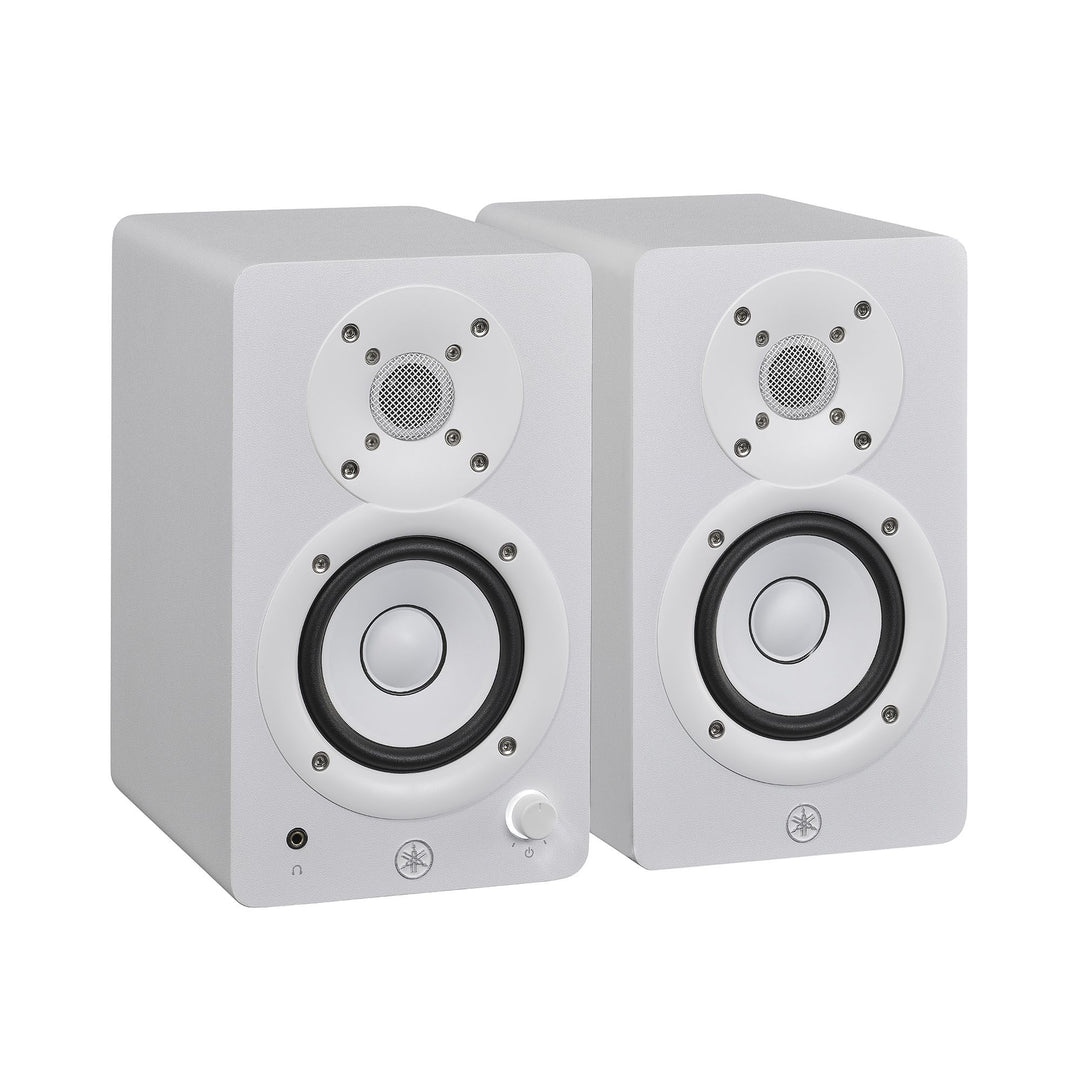
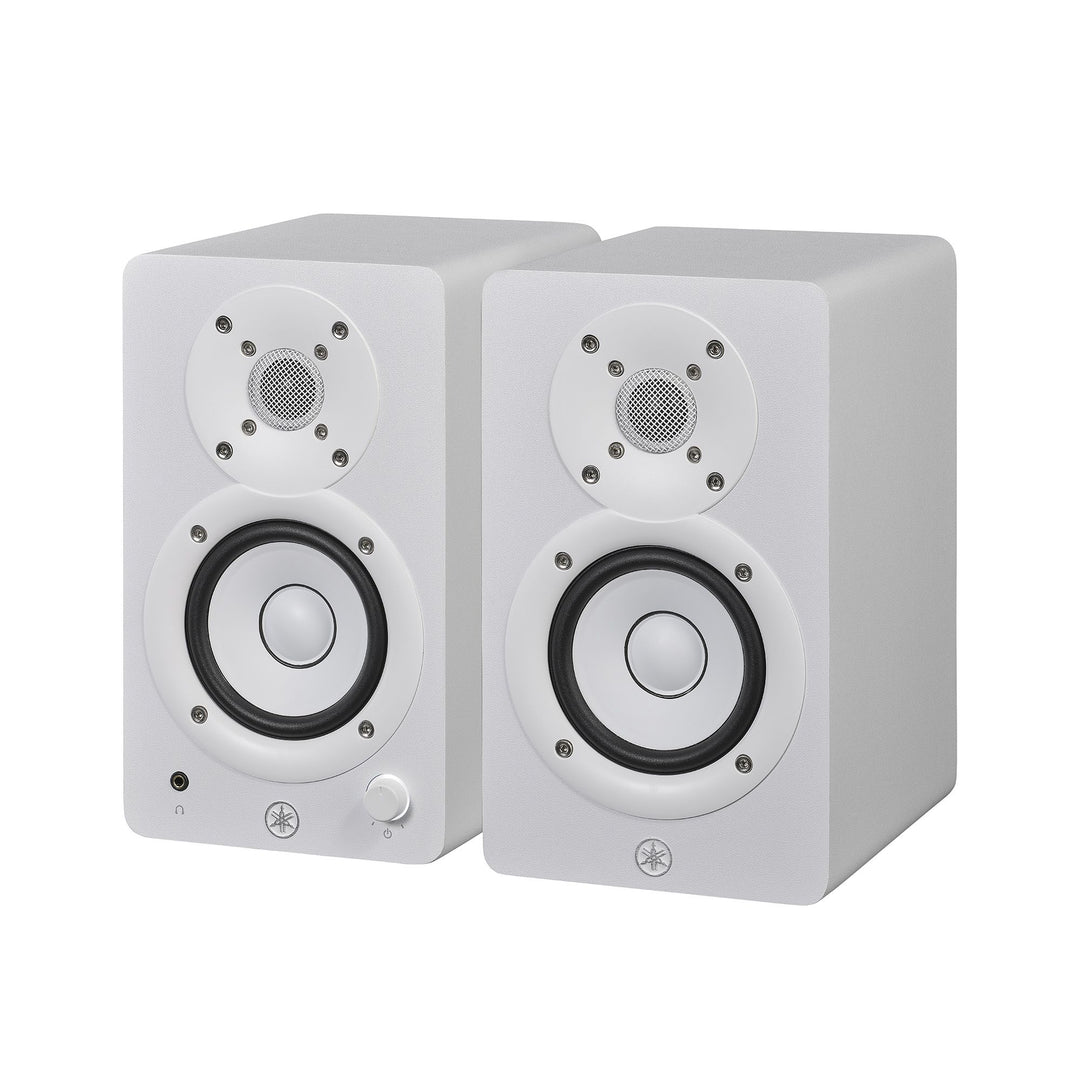
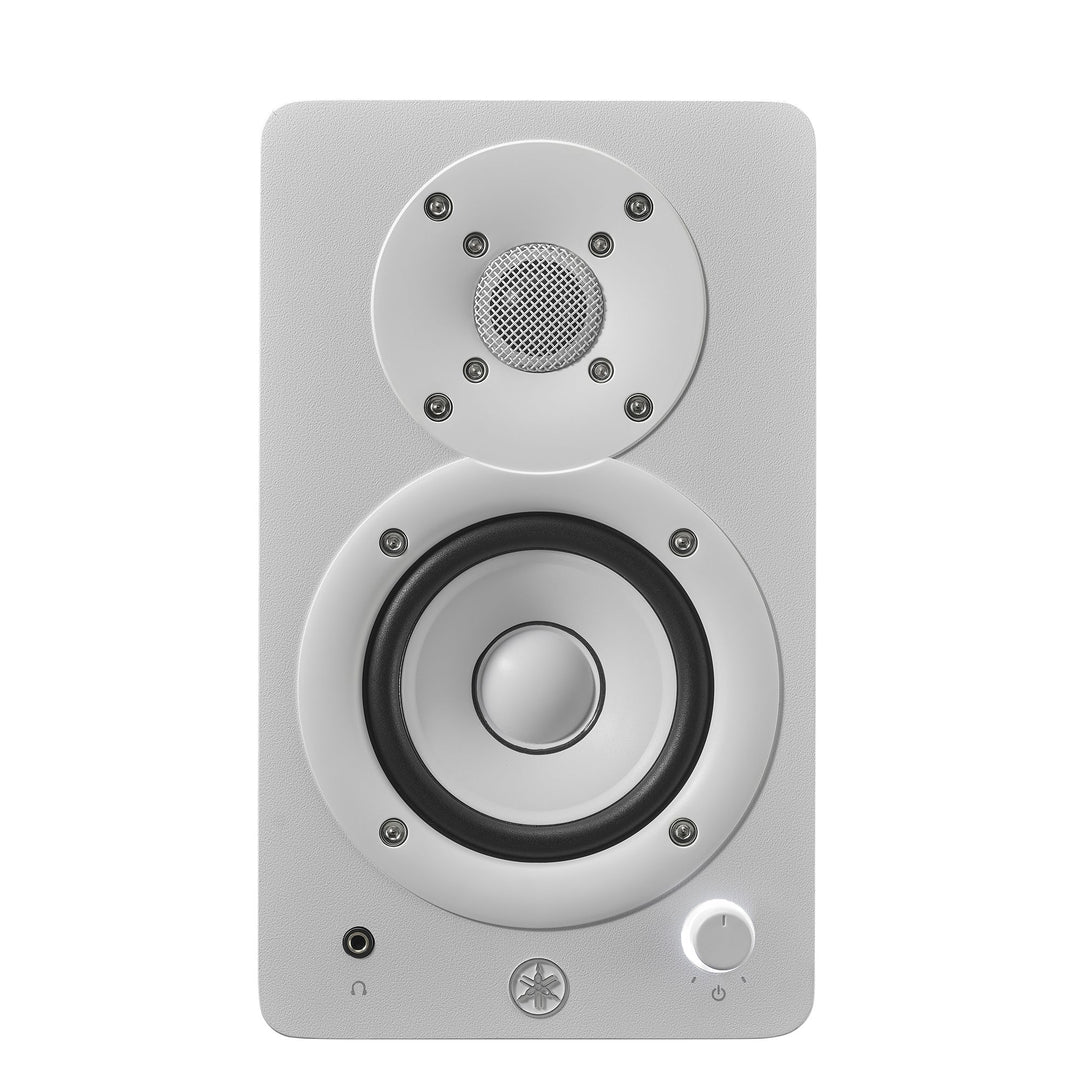
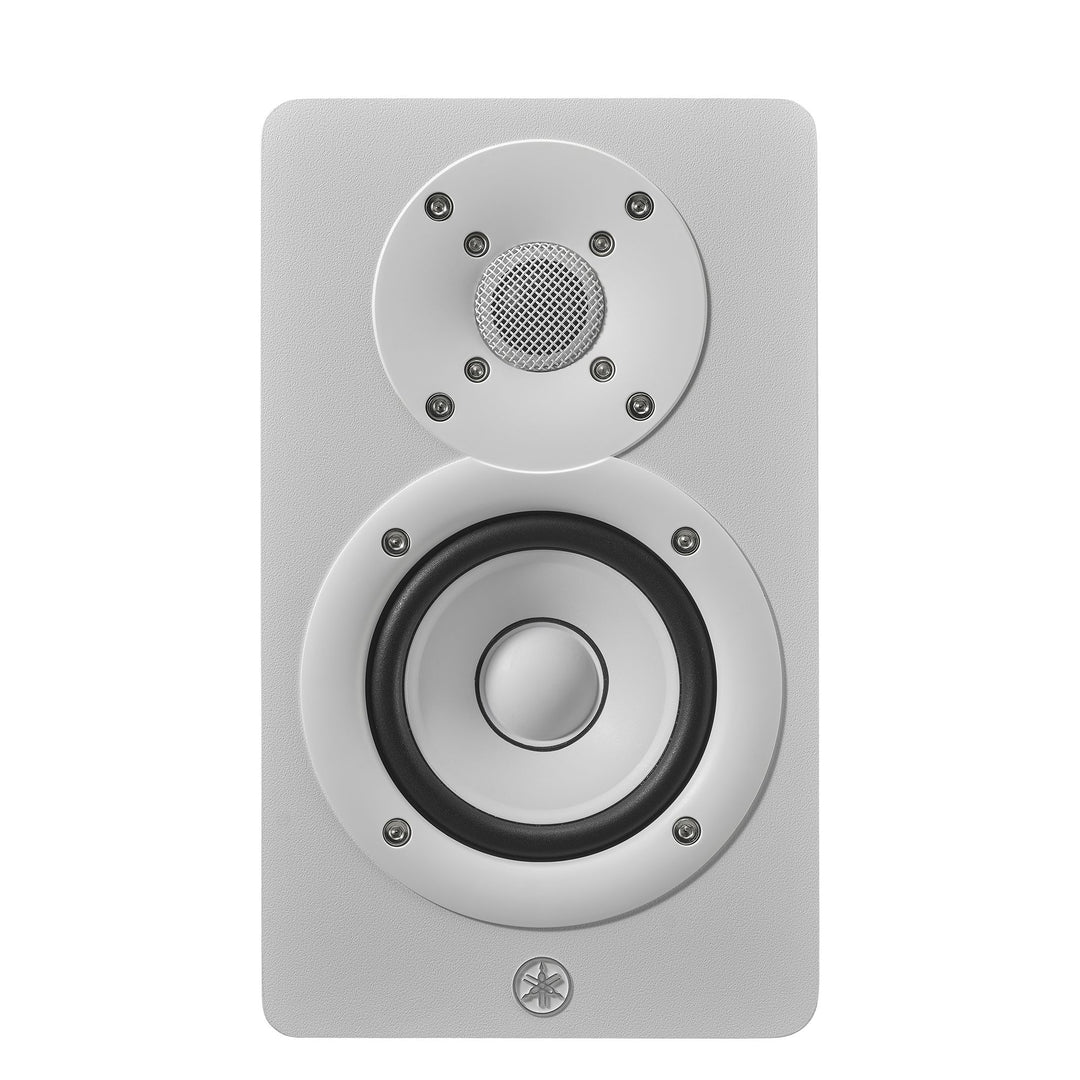
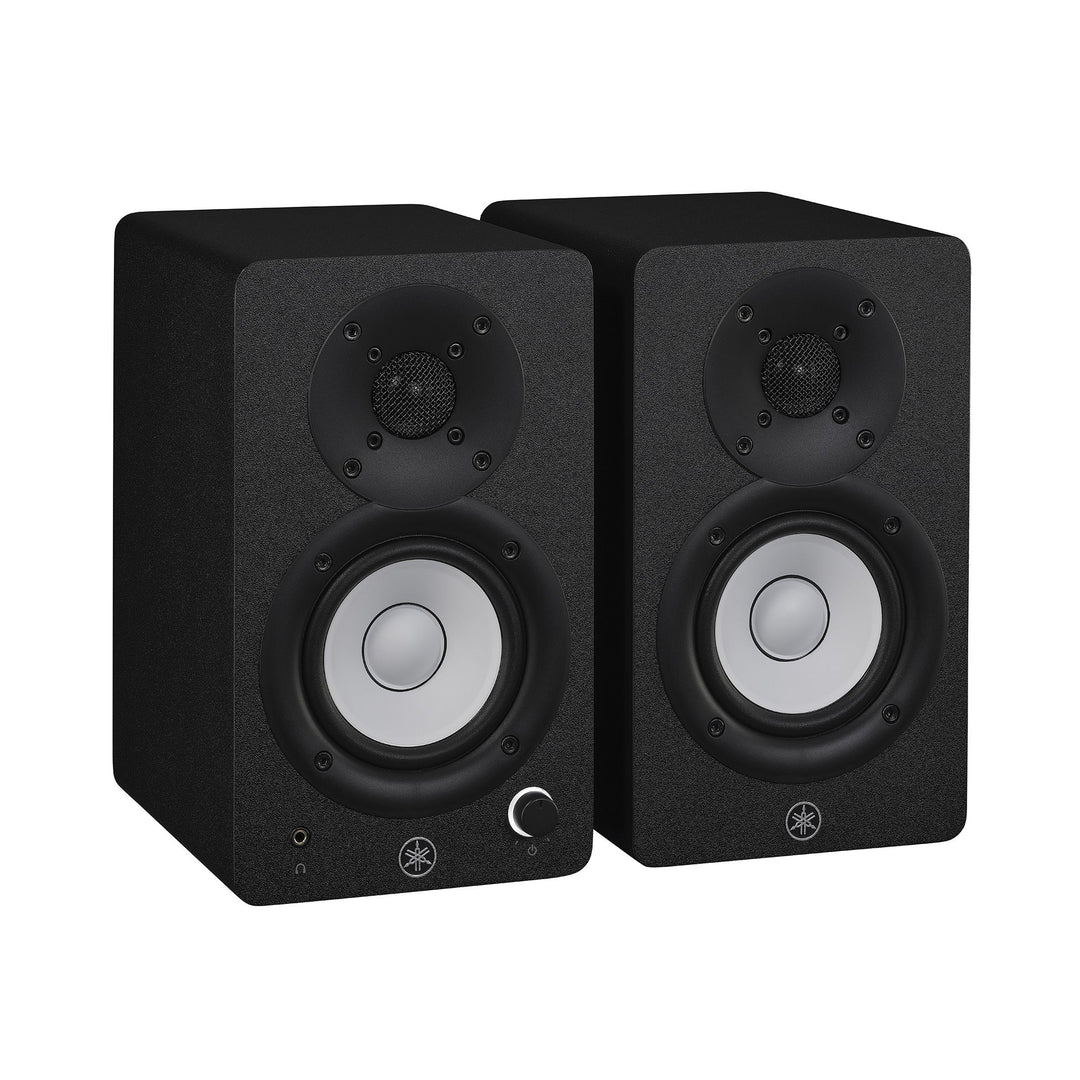
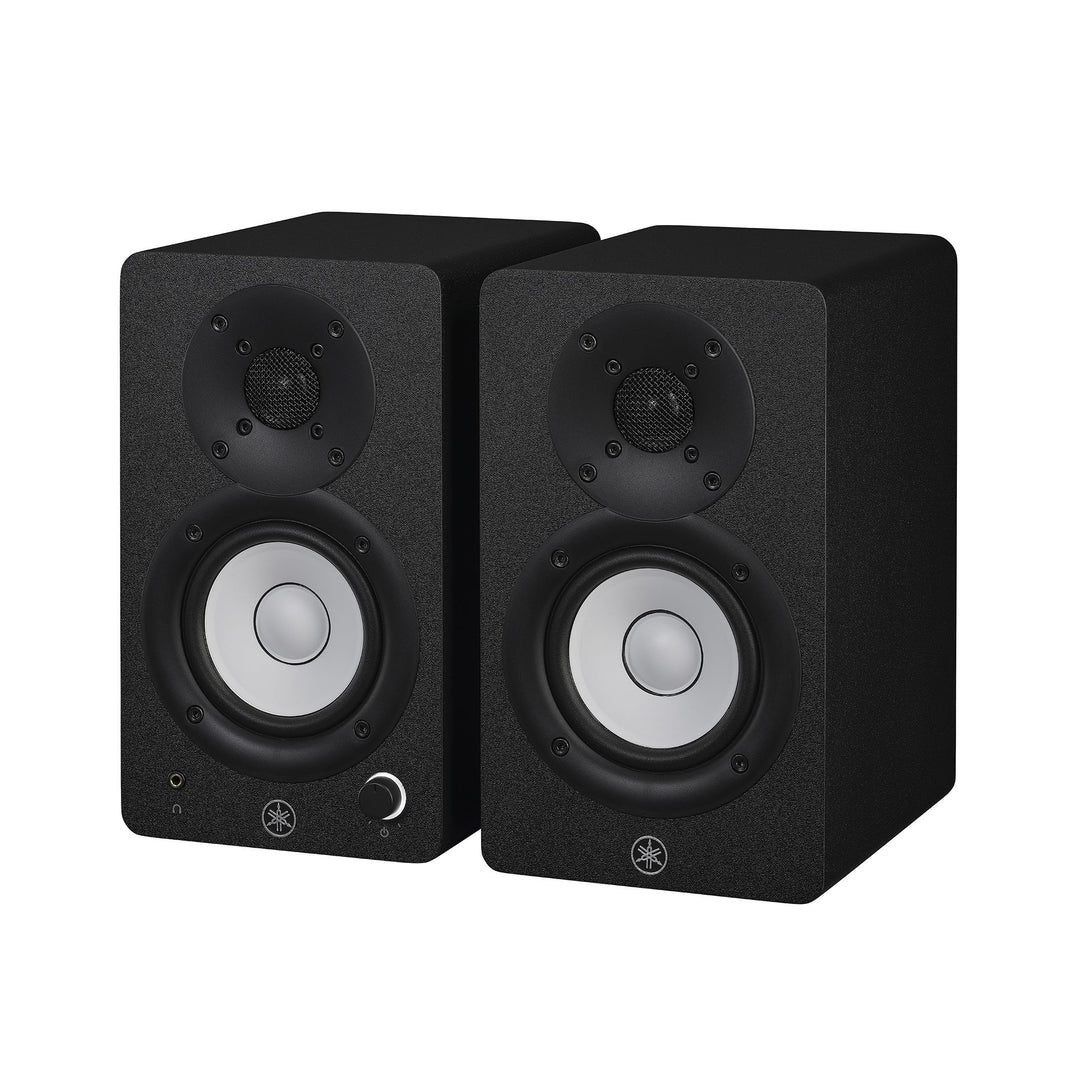
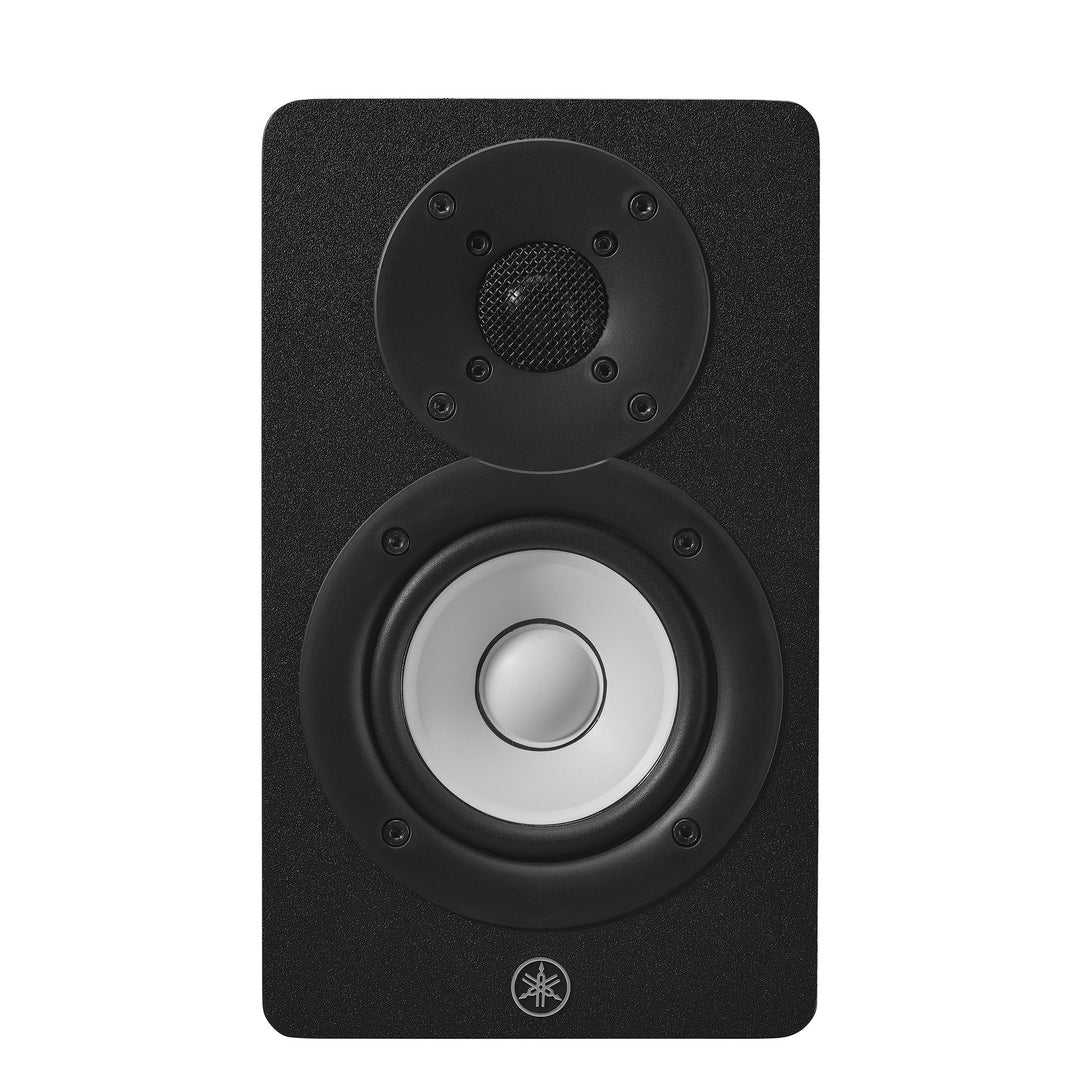
A compact pair of powered studio monitors from Yamaha. Each HS3 has a 3.5-inch cone woofer and a 0.75-inch dome tweeter, with a built-in class-D amplifier that Yamaha rates at 26 W + 26 W (dynamic).
Yamaha says the HS3 and HS4 are made for creators who have limited space and need to keep the volume down, without giving up monitoring quality. The listing is for a pair, in white or black.
Yamaha's HS Series page says HS Series speakers have been trusted for many years by the world's top audio engineers, producers and artists.
The Yamaha HS3 and HS4, from Yamaha
Why you will love it
Sound and design
Each HS3 is a 2-way bass reflex speaker with a 3.5-inch cone woofer and a 0.75-inch soft dome tweeter in an MDF cabinet. Yamaha lists a frequency response of 70 Hz to 22 kHz (-10 dB) and a crossover at 3.2 kHz. Yamaha says the speakers aim for a flat response without colouring the original sound.
Yamaha also describes its Twisted Flare Port, a proprietary bass reflex port design that it says reduces air turbulence noise and gives clear, accurate bass.

One amplifier, two speakers
Yamaha says the compact size of the HS3 and HS4 comes from a highly efficient class-D amplifier. One amplifier serves both speakers, which Yamaha says reduces weight and simplifies the cable connections.
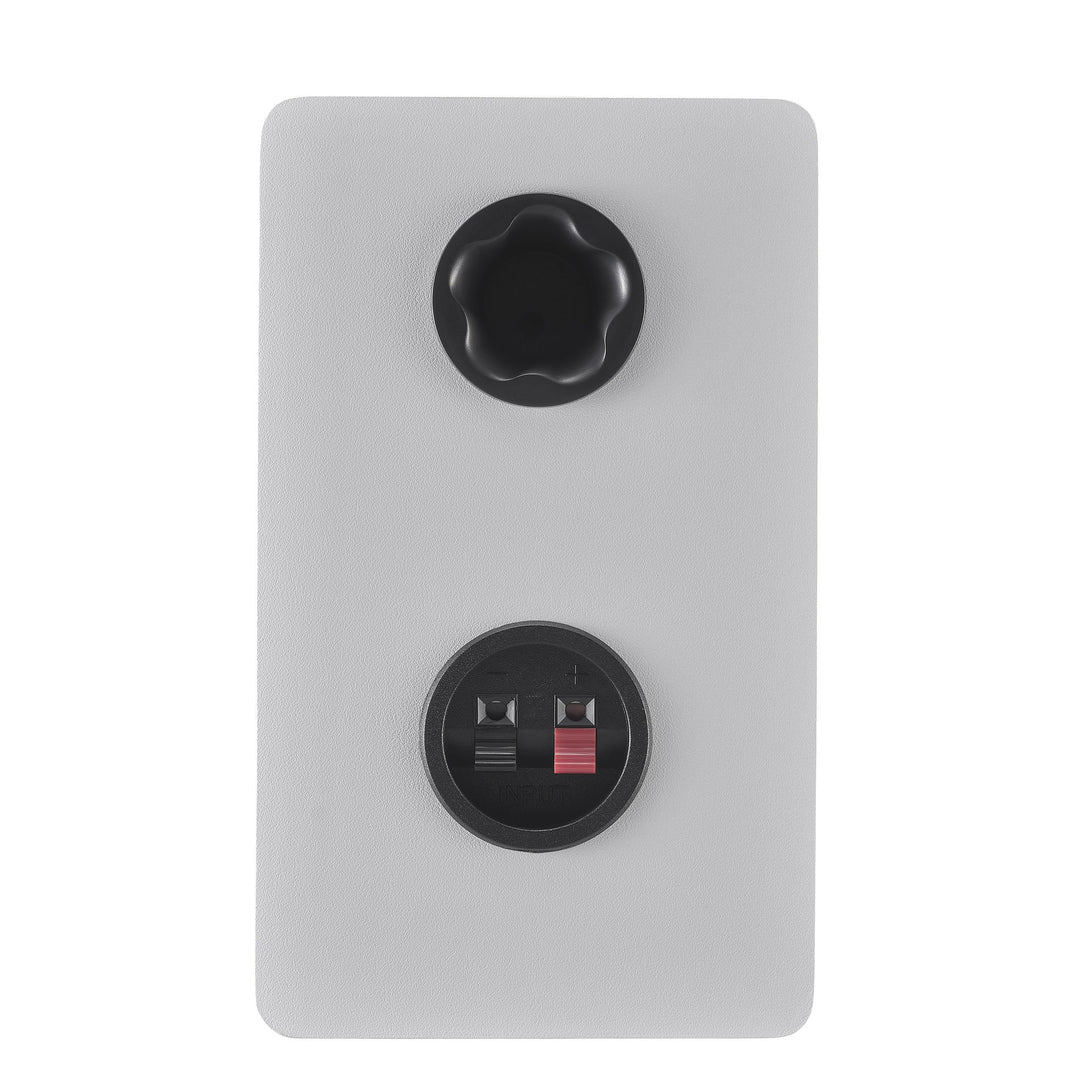
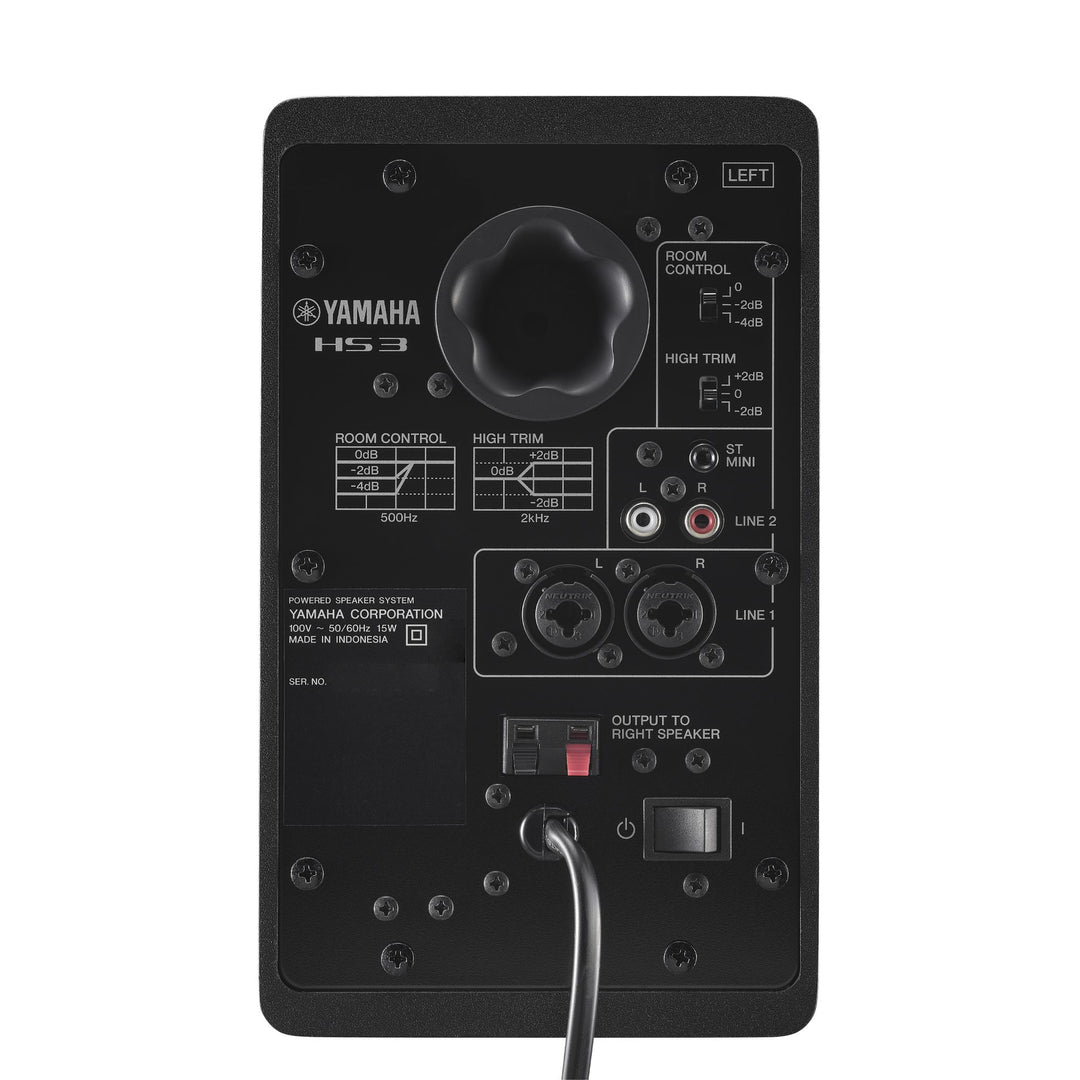
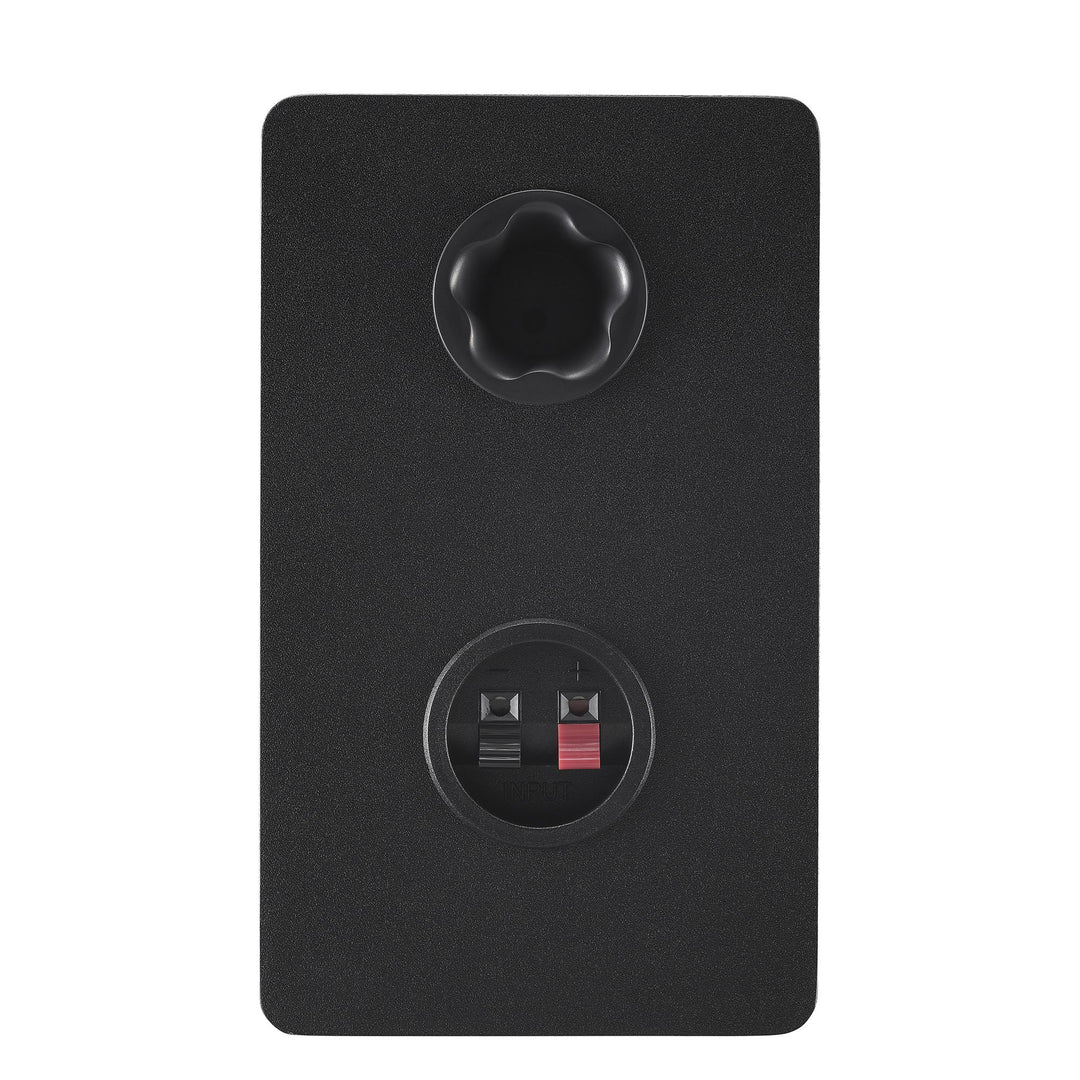
In practice, the inputs, headphone output and speaker output are on the left speaker. The right speaker connects to it with the 2.5 m speaker cable that Yamaha supplies. Yamaha lists the HS3 as sold as a pair.
Room Control and High Trim
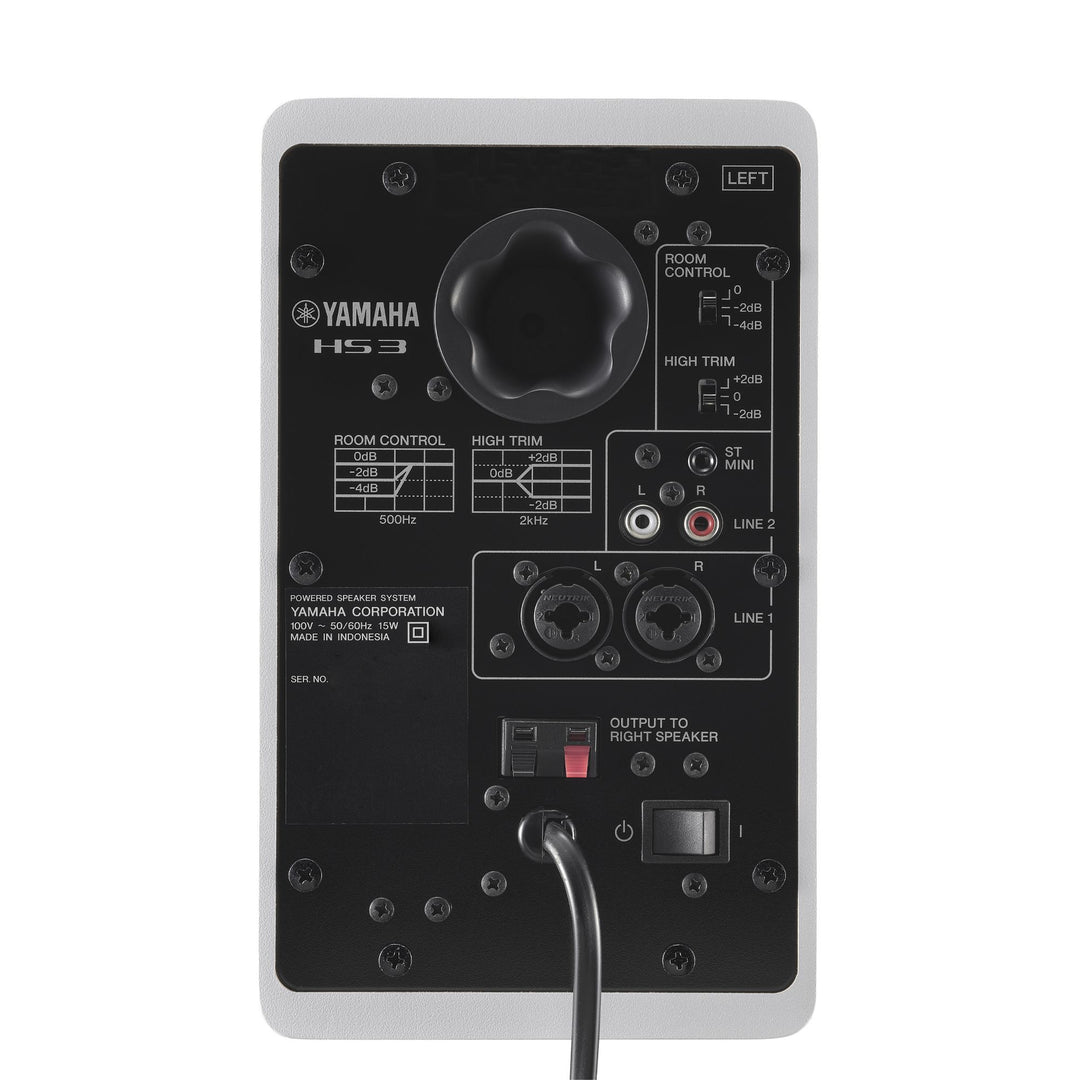
The rear panels have ROOM CONTROL and HIGH TRIM switches. Yamaha says they let you adjust the sound to suit the room, for example by reducing the exaggerated low end that can occur when speakers sit next to walls.
ROOM CONTROL steps through 0, -2 and -4 dB below 500 Hz. HIGH TRIM steps through +2, 0 and -2 dB above 2 kHz.

Inputs and front-panel controls
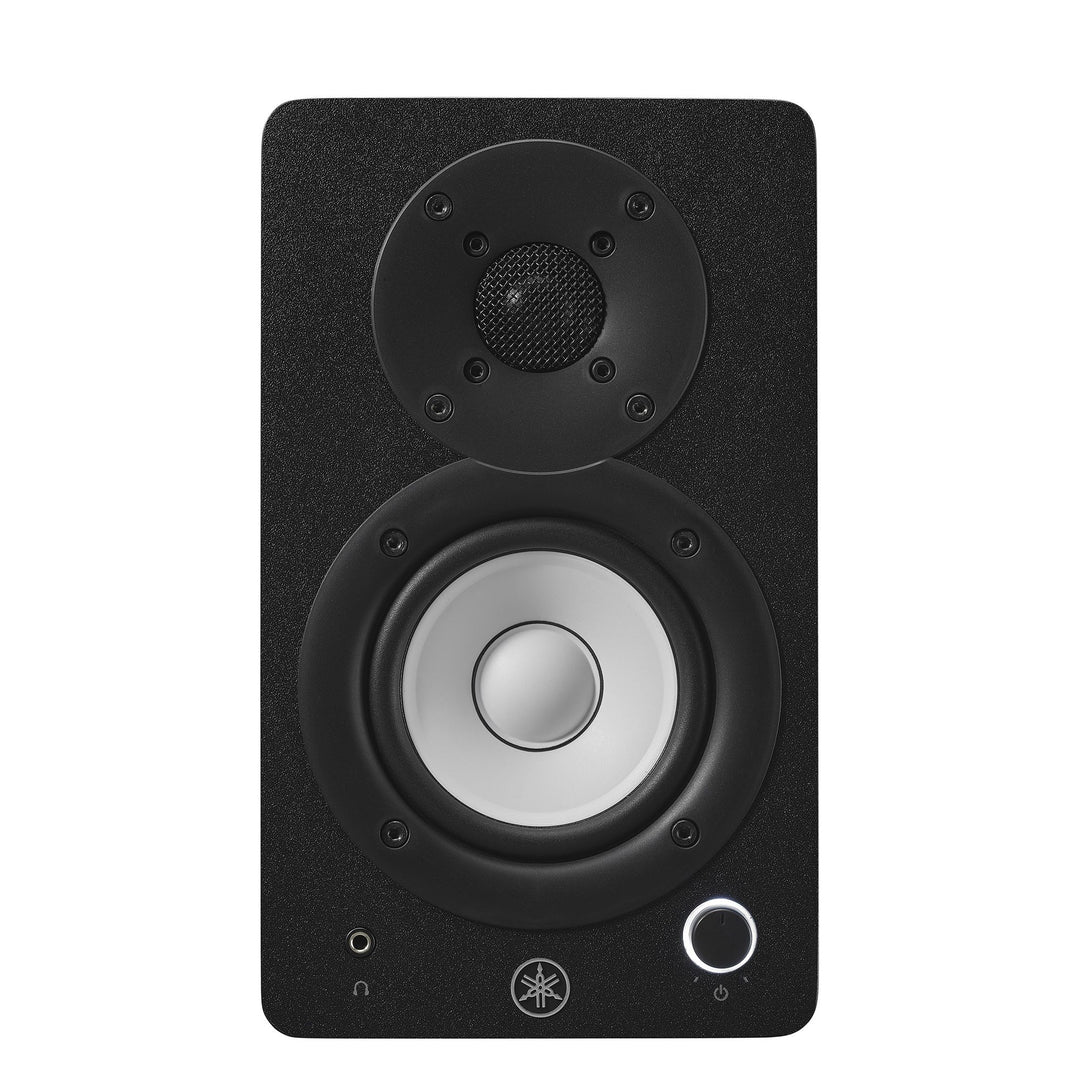
Yamaha says the rear panel has combination XLR/TRS phone, RCA and stereo mini connectors, so you can connect computers, audio interfaces, audio mixers and electric instruments. The power button, volume knob and headphone connector are on the front.
Is it right for you?
A great fit if you…
- Work in a small room, on a desk or in a bedroom studio
- Want to connect a computer, audio interface, mixer or electric instrument
- Want powered speakers with a front headphone output
- Want to adjust the response for speakers near a wall
Worth knowing
- The listing is for a pair. Yamaha lists packaging as a pair
- Maximum output is 100 dB SPL (Yamaha's measured peak). The larger HS4 is rated at 102 dB SPL
- Yamaha's HS3 specifications show no subwoofer output
Build your system
The HS3 and HS4 are the compact models in Yamaha's HS Series.
- Step up in size: The Yamaha HS4 has a 4.5-inch woofer and reaches 60 Hz (-10 dB) in Yamaha's specifications
- Add streaming: The Streaming Essentials bundle pairs a WiiM Pro streamer with the HS3, or see the WiiM Pro on its own
- Place them: See speaker stands for desk and floor positioning
- More from Yamaha: See the Yamaha range
Specifications
Yamaha HS3 (pair)
| Type | 2-way powered speaker, bass reflex |
|---|---|
| Drivers | 3.5" cone woofer, 0.75" dome tweeter |
| Frequency response | 70 Hz - 22 kHz (-10 dB), 85 Hz - 20 kHz (-3 dB) |
| Crossover | 3.2 kHz |
| Maximum output level | 100 dB SPL (measured peak, IEC noise @ 1 m) |
| Output power | 26 W + 26 W (dynamic, RL = 6 Ω), 20 W + 20 W (THD 0.1%, 1 kHz, RL = 6 Ω) |
| Nominal impedance | 6 Ω |
| Inputs | Left speaker: 2 x combo (XLR/TRS phone), 2 x RCA, stereo mini. Right speaker: speaker input |
| Outputs | Left speaker: headphone, speaker output |
| Input sensitivity | Line 1 (combo): +4 dBu. Line 2 (RCA, stereo mini): -10 dBu (volume at maximum) |
| Maximum input level | Line 1 (combo): +20 dBu. Line 2 (RCA, stereo mini): +6 dBu |
| Input impedance | Line 1 (combo): 20 kΩ. Line 2 (RCA, stereo mini): 10 kΩ |
| Controls | Front: volume. Rear: ROOM CONTROL (0/-2/-4 dB under 500 Hz), HIGH TRIM (+2/0/-2 dB above 2 kHz) |
| Power requirements | 100-240 V, 50/60 Hz (Yamaha says to use the supply voltage shown on the rear panel) |
| Power consumption | 15 W |
| Cabinet | MDF |
| Dimensions per speaker (W × H × D) | Left 132 × 223 × 189 mm, right 132 × 223 × 177 mm |
| Net weight | Left 2.8 kg, right 2.1 kg |
Specifications from Yamaha Australia (HS Series HS3/HS4 specs page), checked November 2026. Yamaha says specifications are subject to change without notice.
What is in the box
- Pair of Yamaha HS3 monitors (left and right), with a 1.5 m stereo mini to RCA cable, a 2.5 m speaker cable, an anti-slip pad, a quick start guide and a safety guide (as listed by Yamaha).
Questions people ask
Are these sold as a pair?
Yamaha lists the HS3 as packaged as a pair, with a left and a right speaker. The listing comes in white or black.
Do I need a separate amplifier?
No. The HS3 is a powered speaker with a built-in class-D amplifier. You connect a source such as an audio interface, computer or mixer with a cable.
What can I plug in?
Yamaha lists two combination XLR/TRS phone inputs, two RCA inputs and a stereo mini input on the left speaker, plus a headphone output.
Are the speakers wireless?
No. Yamaha lists wired inputs only, and the two speakers are joined by the supplied 2.5 m speaker cable.
What is the difference between the HS3 and HS4?
In Yamaha's specifications, the HS3 has a 3.5-inch woofer and 0.75-inch tweeter, and the HS4 has a 4.5-inch woofer and 1-inch tweeter. Frequency response (-10 dB) is 70 Hz - 22 kHz for the HS3 and 60 Hz - 22 kHz for the HS4. Maximum output is 100 dB SPL and 102 dB SPL.
Can I use them with a turntable?
Only if the turntable has a built-in preamp or you add a phono preamp. Yamaha lists line-level inputs and no phono input.