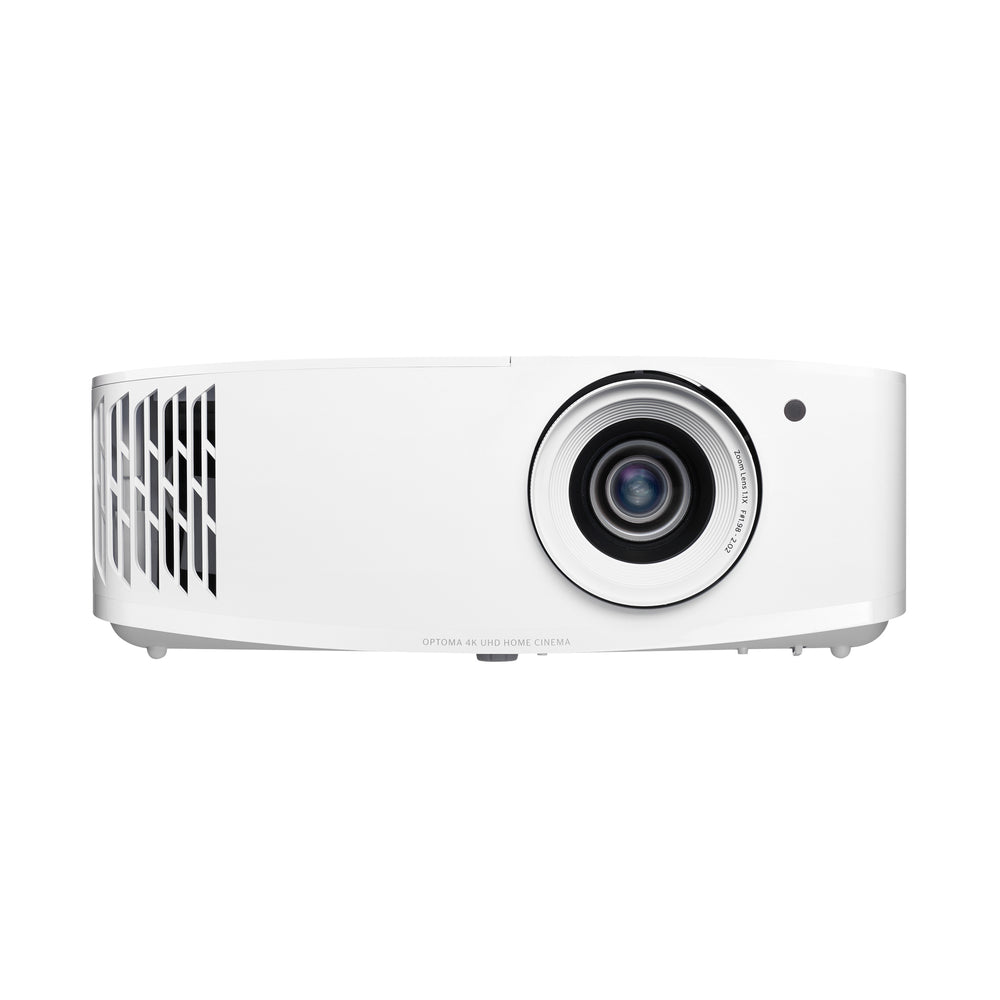
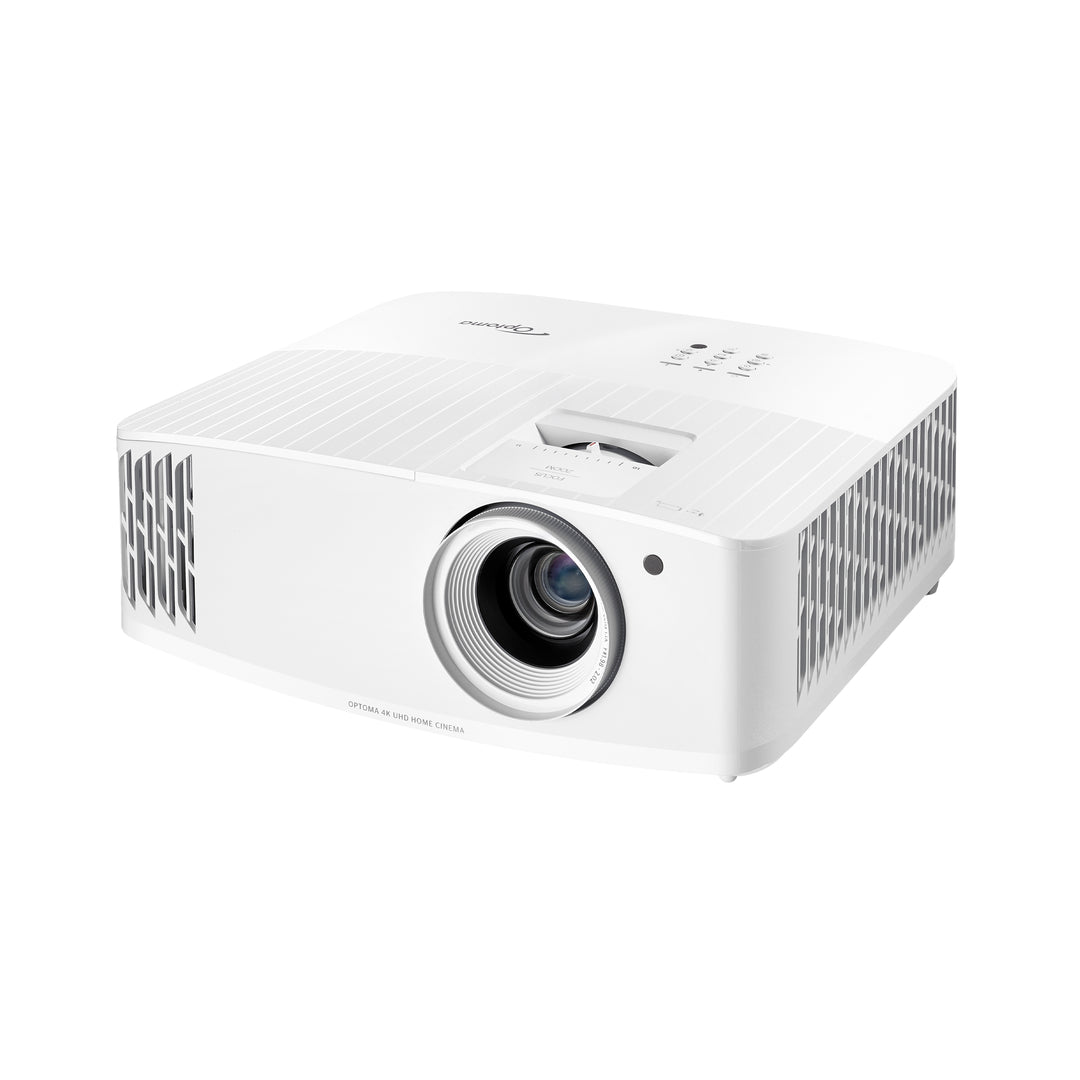
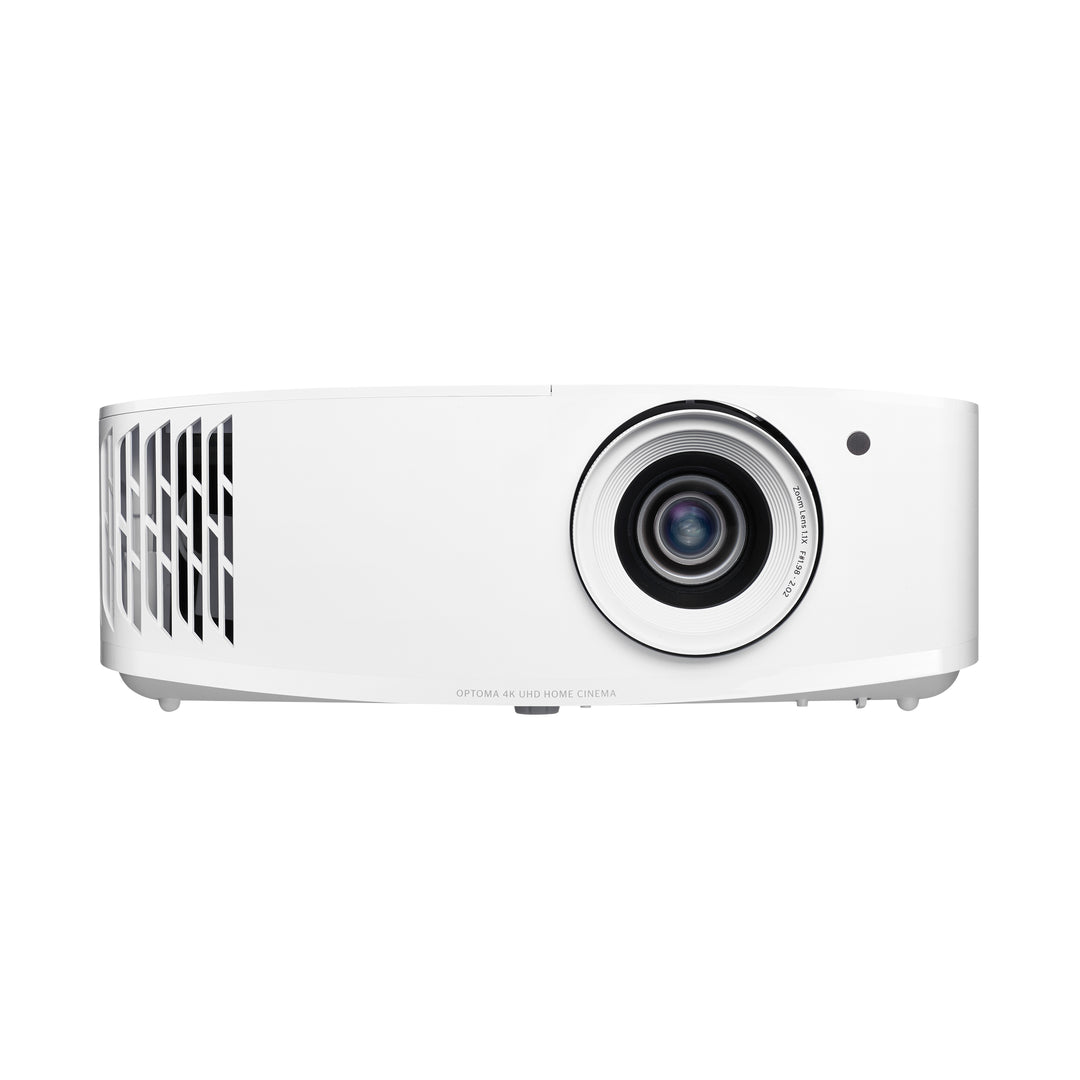
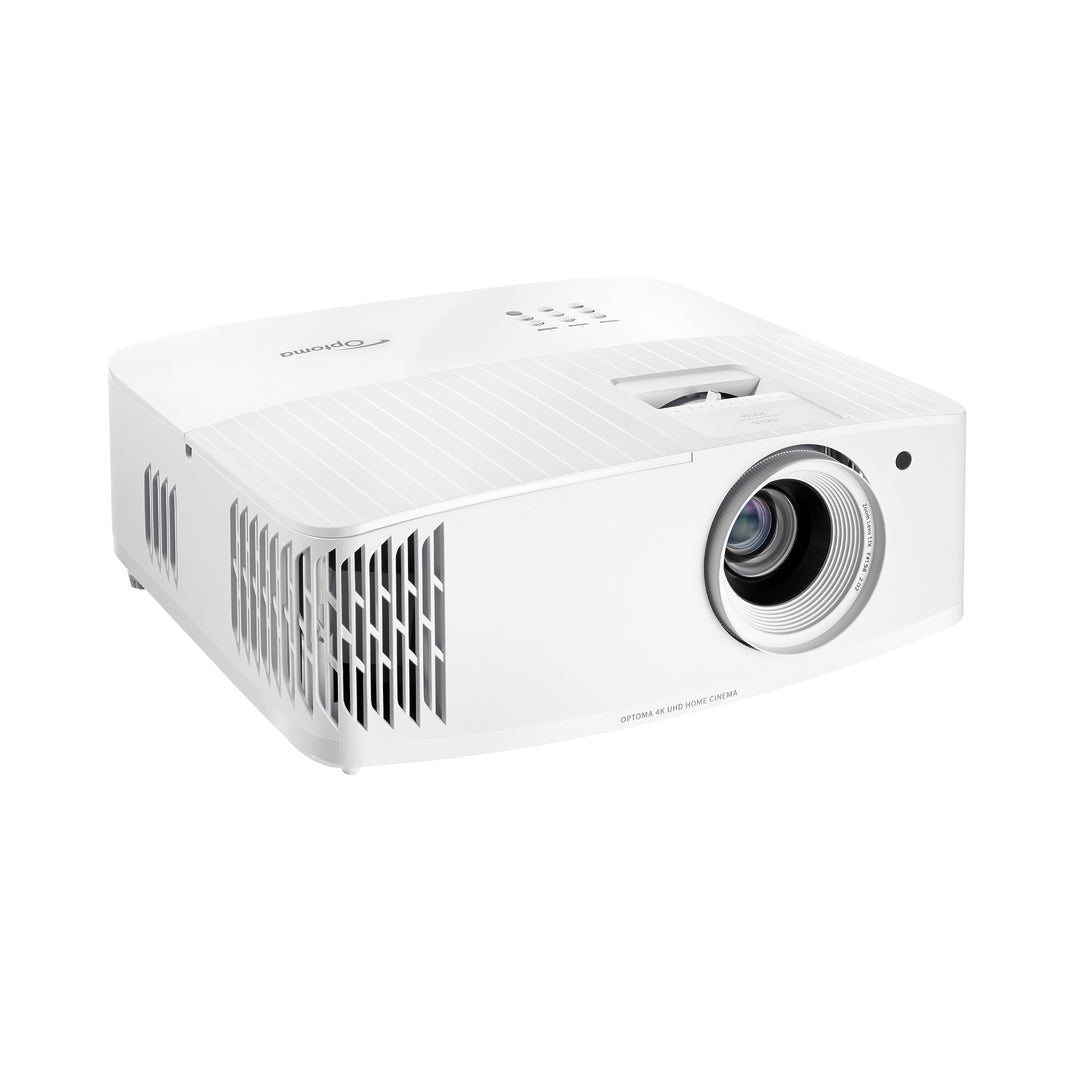
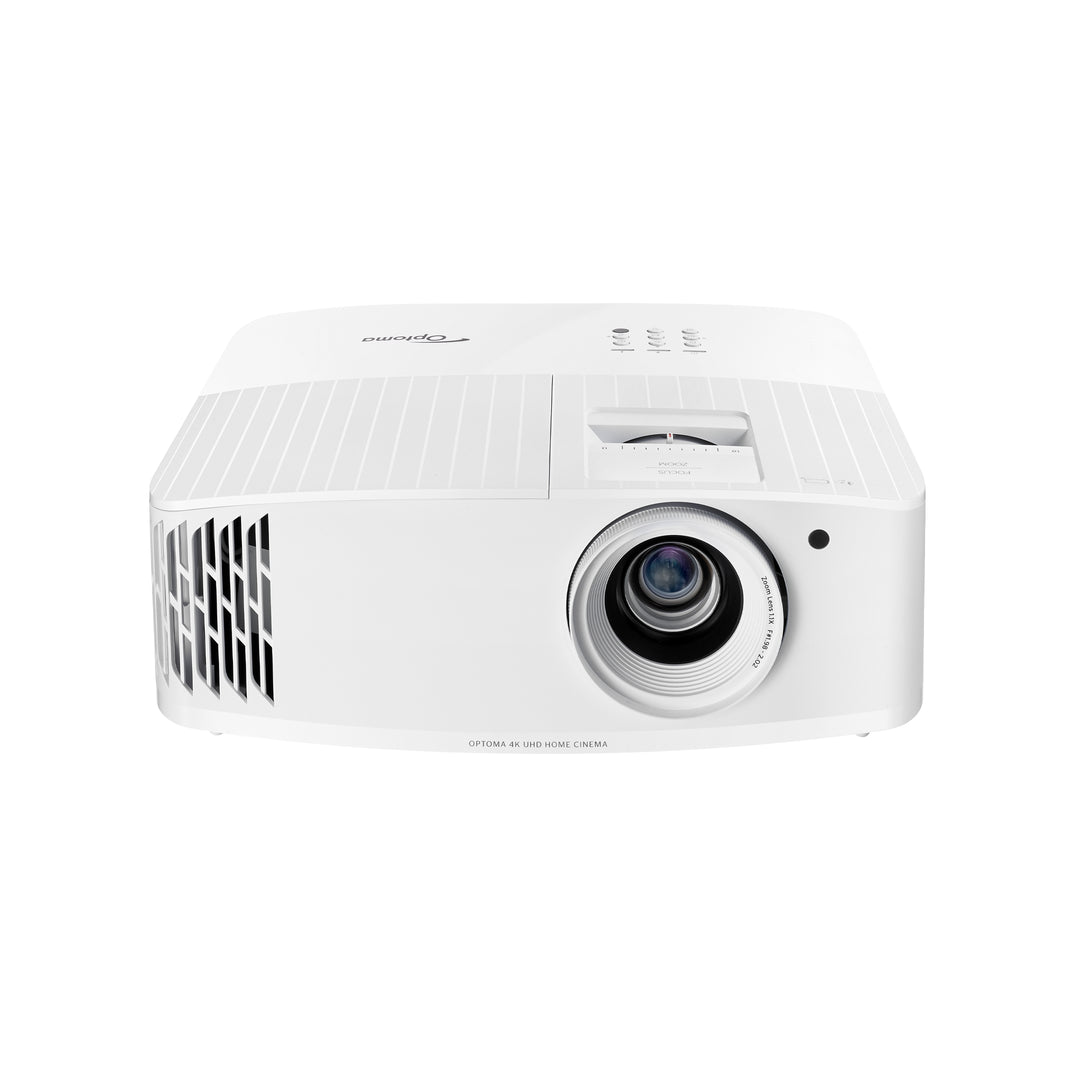
A 4K UHD DLP projector from Optoma with 4,000 lumens, HDR10 and HLG, and an Enhanced Gaming Mode. Optoma lists 4.2 ms input lag at 1080p and 240Hz.
Optoma describes the UHD35+ as a cinema and gaming projector with True 4K UHD resolution. It uses a Texas Instruments 4K UHD DLP chipset with XPR processing to display 8.3 million pixels on screen.
Why you will love it
True 4K UHD
Optoma says the DLP chip with XPR video processing shifts pixels in four ways to reach 8.3 million pixels on screen. It says this meets the Consumer Technology Association's definition of 4K Ultra HD.
Optoma also says a single-chip DLP design is mechanically aligned, so there are no panels to line up.

Bright room design with HDR
Optoma lists 4,000 lumens and a 1,200,000:1 contrast ratio. The RGBWRGBW 8-segment colour wheel and BrilliantColor processing are aimed at accurate colour.
The UHD35+ supports HDR10 and HLG, and switches to the matching display mode when it receives that signal. Dynamic Black adjusts lamp output to the image.
Enhanced Gaming Mode
Optoma says Enhanced Gaming Mode outputs 1080p at 240Hz and lists input lag of 4.2 ms at 1080p 240Hz, 8.9 ms at 1080p 120Hz and 16.7 ms at 1080p 60Hz or 4K 60Hz.
Optoma says keystone correction, image shift and edge mask are turned off in this mode. It also lists a Game display mode, HDR Sim for non-HDR games and an ultra-wide 21:9 display.


Connections and 3D
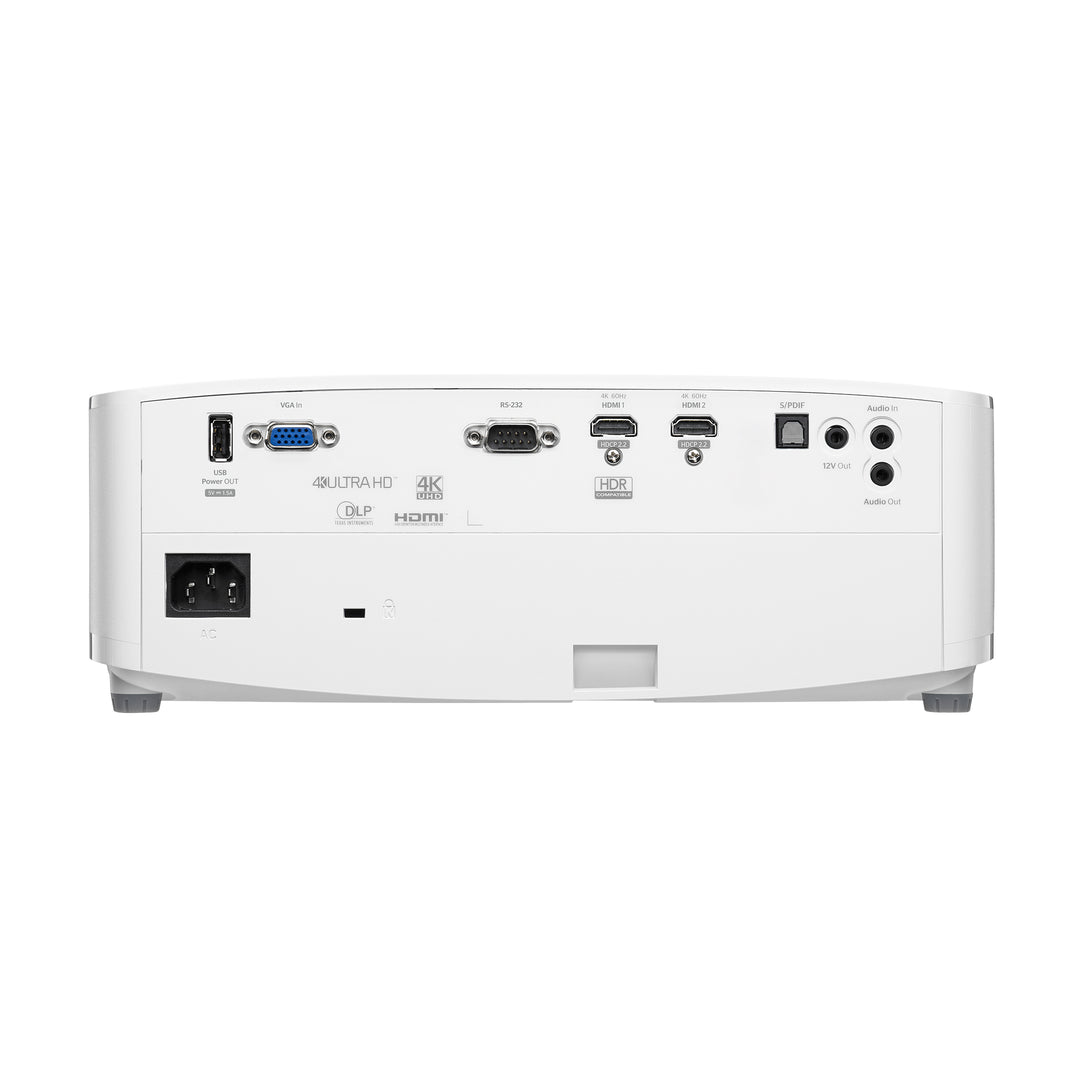
Two HDMI 2.0 inputs with HDCP 2.2 handle 4K 60Hz sources. There is also VGA in, a 3.5 mm audio in and out, S/PDIF out, RS-232C, a 12V trigger and a USB power out.
Optoma lists 3D support (frame packing and frame sequential, DLP-Link) and ISF Day, Night and 3D modes for saving calibration settings.
Is it right for you?
A great fit if you…
- Want a 4K UHD projector for movies and gaming
- Want low input lag for console or PC gaming
- Want HDR10 and HLG support
- Play 3D Blu-ray or PC content
Worth knowing
- The 240Hz output is 1080p in Enhanced Gaming Mode
- Keystone correction and image shift are turned off in Enhanced Gaming Mode
- It has a lamp light source, and lamp life depends on the mode used
- Its built-in speaker is 10 W, so most people will want separate sound
Build your system
The UHD35+ has a 10 W speaker, a 3.5 mm audio out and an S/PDIF out.
- Screen: See our projector screens.
- Sound: Add an AV receiver or a soundbar.
- Also consider: For a 1080p option, see the Optoma HD30HDR.
- More options: Browse projectors or home theatre packages.
Specifications
Picture
| Display technology | DLP 4K UHD chip |
|---|---|
| Native resolution | 4K UHD (3840 x 2160) |
| Brightness | 4,000 lumens |
| Contrast | 1,200,000:1 |
| Light source | Lamp |
| Lamp life | 4,000 / 10,000 / 15,000 hrs (Bright / STD / Dynamic Black) |
| Displayable colours | 1073.4 million (10 bit) |
| HDR | HDR10, HLG |
| 3D support | Frame packing and frame sequential |
| Uniformity | 80% |
Gaming input lag
| 4K 60Hz | 16.7 ms |
|---|---|
| 1080p 60Hz | 16.7 ms |
| 1080p 120Hz | 8.9 ms |
| 1080p 240Hz | 4.2 ms |
Lens and placement
| Throw ratio | 1.50 - 1.66 |
|---|---|
| Zoom | 1.1x manual |
| Keystone correction | ±40° vertical |
| Projection lens | F# 1.98 - 2.02, f 15.84 - 17.44 mm |
| Aspect ratio | 16:9 |
Connections
| HDMI | 2 x HDMI 2.0 (HDCP 2.2, 4K 60Hz) |
|---|---|
| Other inputs | VGA in, audio in (3.5 mm) |
| Outputs | Audio out (3.5 mm), S/PDIF out (2-channel stereo PCM), 12V trigger |
| Control | RS-232C (9-pin D-sub) |
| USB | USB 2.0 (5V power 1.5A, firmware upgrade) |
| Speaker | 10 W |
General
| Noise level | 26 dB |
|---|---|
| Power consumption | 336 W max, under 0.5 W standby |
| Weight | 4.2 ±0.2 kg |
| Dimensions (W x D x H) | 315 x 270 x 115 mm (without feet) |
| Power supply | 100-240 V, 50/60 Hz, auto-switching |
Specifications from the Optoma Australia UHD35+ page, checked November 2026.
Questions people ask
Is it true 4K?
Optoma says it uses a 4K UHD DLP chipset with XPR processing to display 8.3 million pixels on screen.
Does it support 240Hz?
Yes, in Enhanced Gaming Mode, where output runs at 1080p and 240Hz. Optoma lists 4.2 ms input lag at 1080p 240Hz.
Does it support HDR?
Yes. Optoma lists HDR10 and HLG.
What connections does it have?
Two HDMI 2.0 inputs, VGA in, audio in and out, S/PDIF out, RS-232C, a 12V trigger and a USB power out.
Does it support 3D?
Yes. Optoma lists frame packing and frame sequential 3D using DLP-Link.